
22 Aug
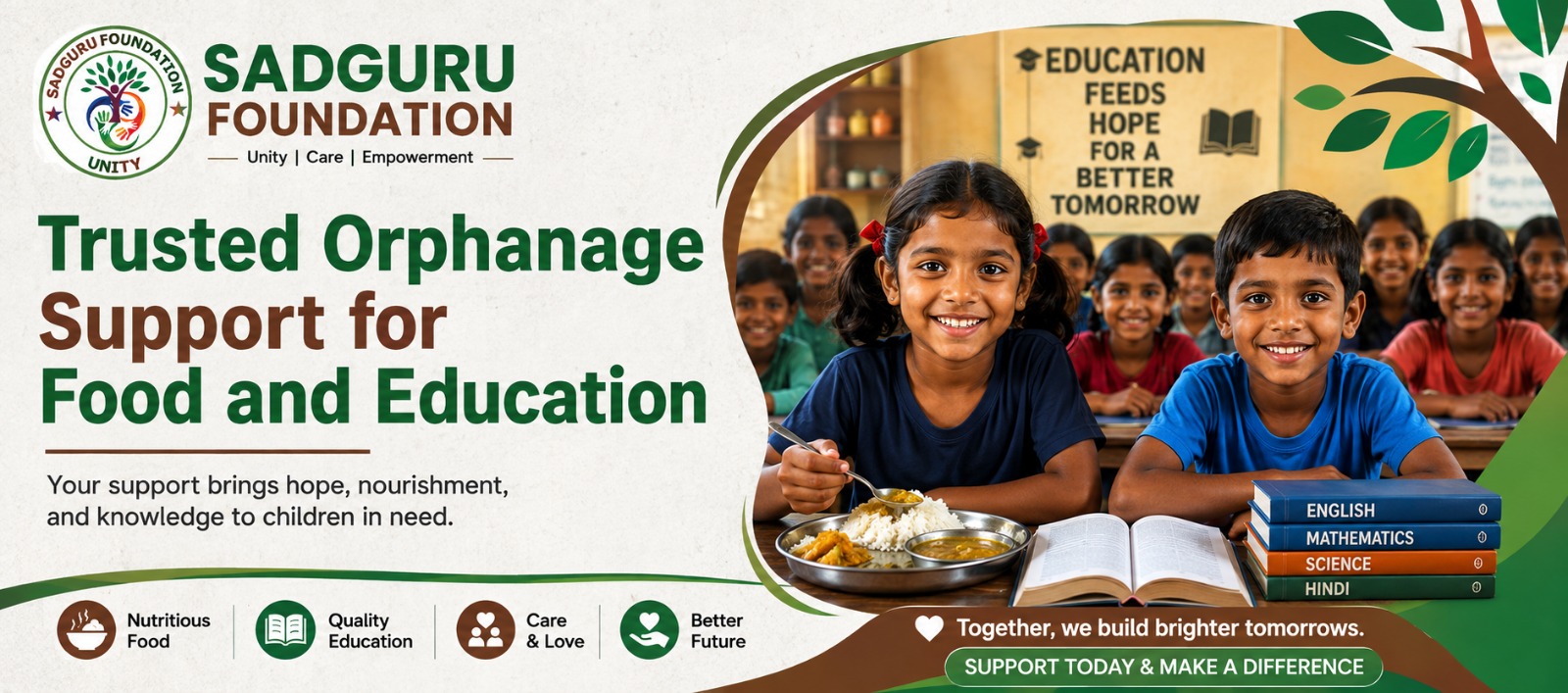
Trusted Orphanage Support for Food and Education
For individuals who want to make a meaningful difference in a child’s life, orphanage support donations can help fund essential needs such as nutritious meals, education, healthcare, clothing, learning materials, and safe shelter. However, responsible giving is about more than simply transferring money. Donors should understand how an organization operates, what children actually need, how contributions are used, and whether the charity provides appropriate transparency. Government guidance for donors recommends researching publicly available information about an organization, its management, programs, and areas of operation before contributing.
Why Food and Education Should Be at the Heart of Child Support
Food and education are two foundational requirements for a child’s healthy development. A child cannot fully benefit from schooling without adequate nutrition, while food alone cannot provide the skills and opportunities needed for a secure future.
A well-designed support program can combine daily meals with school fees, uniforms, books, stationery, tutoring, healthcare, and emotional support. Existing child-support programs demonstrate how sponsorship can cover several interconnected areas rather than treating education or nutrition as isolated needs.
This is why orphanage support donations should ideally be viewed as an investment in continuity. A one-time contribution can solve an immediate requirement, but recurring support can help an organization plan meals, educational expenses, medical care, and other essential services more reliably.
What Can Your Contribution Support?
Depending on the organization’s current requirements, orphanage support donations may contribute toward:
- Daily or weekly nutritious meals
- School fees and tuition
- Books, notebooks, stationery, and educational materials
- School uniforms and footwear
- Healthcare and medicines
- Hygiene products
- Safe accommodation and utilities
- Skill development and career preparation
- Recreational and extracurricular activities
The important point is to ask what the organization currently needs instead of assuming that every donated item will automatically be useful.
Child Sponsorship Can Create Consistent Support
For donors looking for a longer-term approach, child sponsorship can provide a structured way to contribute toward a child’s education, nutrition, healthcare, and general care.
Sponsorship models vary considerably. For example, some organizations publish separate monthly costs for education, meals, healthcare, accommodation, books, and other requirements.
A responsible donor should therefore ask:
- What exactly does the sponsorship contribution cover?
- Is the money restricted to one child or pooled across a programme?
- How frequently are updates provided?
- What happens if the child’s circumstances change?
- How is the child’s privacy protected?
- Does the organization provide financial or programme reporting?
A sponsorship programme should never turn a child into a fundraising commodity. Children deserve dignity, privacy, protection, and age-appropriate care.
Why Donating Food and Books Requires Planning
Many donors naturally want to help by donating food and books, but useful in-kind giving requires coordination.
Food may have specific nutritional, storage, quantity, packaging, and expiry requirements. Similarly, books may only be useful if they match the children’s age, language, curriculum, and educational level.
A practical approach is to contact the organization first and request a current needs list. Ask about:
- Required food items and quantities
- Acceptable package sizes
- Minimum shelf life
- School grades and subjects
- Preferred languages
- Stationery requirements
- Whether new or gently used books are accepted
- Delivery arrangements
Some established organizations explicitly request donors to contact them before sending goods so that contributions match actual needs.
This approach reduces waste while ensuring that generosity produces practical value.
How to Identify Reliable Orphanage Organizations
Searching online can produce hundreds of organizations, but visibility does not automatically equal credibility. Reliable orphanage organizations should be evaluated through evidence rather than emotional advertising alone.
For residential child-care institutions in India, legal and safeguarding verification is particularly important. Sadguru Foundation's donor guidance notes that organizations housing children in need of care and protection should have the appropriate registration under the Juvenile Justice framework, while donors should also examine identity, safeguarding, financial reporting, and inspection information.
Before making a significant donation, consider these checks:
1. Verify the organization’s legal identity
Compare the organization’s legal name, registration information, address, website, payment beneficiary, and donation receipt details.
2. Check relevant child-care authorization
If the organization operates a residential child-care institution, ask for its current Child Care Institution registration and related details.
3. Review financial transparency
Look for annual reports, audited financial statements, programme information, and clear explanations of how donations are utilized.
4. Verify tax information
If tax benefits are advertised, verify the applicable approval and documentation rather than relying only on a claim displayed on a website.
5. Understand the actual programme
Ask how many children are supported, what services are provided, who manages the programme, and how outcomes are monitored.
6. Protect children’s privacy
A legitimate organization should be able to demonstrate impact without unnecessarily publishing children’s personal information, medical details, addresses, or other sensitive information.
Charity Due Diligence Protects Donors and Children
Charity due diligence does not mean being suspicious of every nonprofit. It means making an informed decision before committing money or resources.
This concern also appears frequently in online donor discussions. Reddit users discussing charitable giving have raised concerns about unsolicited fundraising, emotional appeals, unclear use of donations, and organizations that are difficult to verify. Other users recommend visiting an organization, volunteering, checking evidence of its work, or beginning with smaller contributions.
These discussions should not be treated as authoritative evidence about any particular NGO. They do, however, reveal common questions donors ask: Is the organization genuine? Where does my money go? Can I verify the work? Can I see the programme myself?
A good donor verification process can therefore include:
Legal identity → child-care authorization → financial information → programme evidence → donation receipt → utilization reporting.
For larger or recurring contributions, asking these questions before donating is especially sensible.
The Importance of Regular Support
Children’s needs do not disappear after a fundraising campaign ends. Food must be purchased repeatedly, school expenses recur, educational materials become outdated, and healthcare requirements can arise unexpectedly.
That is why regular food and educational supplies can be more valuable than irregular donations that do not align with programme planning.
Recurring contributions allow organizations to forecast expenditure and maintain continuity. Some established sponsorship programmes explicitly encourage recurring contributions because uninterrupted support makes longer-term planning easier.
For donors, a small monthly contribution may therefore be more sustainable than making a large donation once and forgetting about the programme.
How Sadguru Foundation Can Help You Support Children
Sadguru Foundation provides avenues for people who want to contribute toward children’s welfare through financial assistance, education-related support, shelter-related needs, and other forms of charitable giving. Its published guidance also emphasizes checking an organization’s registration, safeguarding practices, financial information, programme needs, and impact before making a commitment.
For a prospective donor, the most useful approach is to select a clearly defined purpose—such as education, meals, school materials, or general child welfare—and then confirm the current requirement with the foundation.
You can also consider becoming a volunteer. Volunteering can provide a more profound understanding of how a programme works while allowing you to contribute skills, time, educational assistance, fundraising support, or other practical resources.
What Should You Ask Before Making Any Orphanage Support Donations?
Before proceeding with orphanage support donations, use a simple donor checklist:
- Is the organization legally identifiable?
- Is the residential child-care facility appropriately registered?
- Can the organization explain how donations are used?
- Are donation receipts provided?
- Is financial or programme reporting available?
- Does the organization have child-safeguarding procedures?
- Are in-kind donations currently required?
- How are children’s privacy and dignity protected?
- Can volunteers understand the programme through appropriate visits or activities?
- Is there a clear contact channel for donation-related questions?
These questions take only a few minutes but can substantially improve the quality of a donor’s decision.For individuals who want to make a meaningful difference in a child’s life, orphanage support donations can help fund essential needs such as nutritious meals, education, healthcare, clothing, learning materials, and safe shelter. However, responsible giving is about more than simply transferring money. Donors should understand how an organization operates, what children actually need, how contributions are used, and whether the charity provides appropriate transparency. Government guidance for donors recommends researching publicly available information about an organization, its management, programs, and areas of operation before contributing.
Why Food and Education Should Be at the Heart of Child Support
Food and education are two foundational requirements for a child’s healthy development. A child cannot fully benefit from schooling without adequate nutrition, while food alone cannot provide the skills and opportunities needed for a secure future.
A well-designed support program can combine daily meals with school fees, uniforms, books, stationery, tutoring, healthcare, and emotional support. Existing child-support programs demonstrate how sponsorship can cover several interconnected areas rather than treating education or nutrition as isolated needs.
This is why orphanage support donations should ideally be viewed as an investment in continuity. A one-time contribution can solve an immediate requirement, but recurring support can help an organization plan meals, educational expenses, medical care, and other essential services more reliably.
What Can Your Contribution Support?
Depending on the organization’s current requirements, orphanage support donations may contribute toward:
- Daily or weekly nutritious meals
- School fees and tuition
- Books, notebooks, stationery, and educational materials
- School uniforms and footwear
- Healthcare and medicines
- Hygiene products
- Safe accommodation and utilities
- Skill development and career preparation
- Recreational and extracurricular activities
The important point is to ask what the organization currently needs instead of assuming that every donated item will automatically be useful.
Child Sponsorship Can Create Consistent Support
For donors looking for a longer-term approach, child sponsorship can provide a structured way to contribute toward a child’s education, nutrition, healthcare, and general care.
Sponsorship models vary considerably. For example, some organizations publish separate monthly costs for education, meals, healthcare, accommodation, books, and other requirements.
A responsible donor should therefore ask:
- What exactly does the sponsorship contribution cover?
- Is the money restricted to one child or pooled across a programme?
- How frequently are updates provided?
- What happens if the child’s circumstances change?
- How is the child’s privacy protected?
- Does the organization provide financial or programme reporting?
A sponsorship programme should never turn a child into a fundraising commodity. Children deserve dignity, privacy, protection, and age-appropriate care.
Why Donating Food and Books Requires Planning
Many donors naturally want to help by donating food and books, but useful in-kind giving requires coordination.
Food may have specific nutritional, storage, quantity, packaging, and expiry requirements. Similarly, books may only be useful if they match the children’s age, language, curriculum, and educational level.
A practical approach is to contact the organization first and request a current needs list. Ask about:
- Required food items and quantities
- Acceptable package sizes
- Minimum shelf life
- School grades and subjects
- Preferred languages
- Stationery requirements
- Whether new or gently used books are accepted
- Delivery arrangements
Some established organizations explicitly request donors to contact them before sending goods so that contributions match actual needs.
This approach reduces waste while ensuring that generosity produces practical value.
How to Identify Reliable Orphanage Organizations
Searching online can produce hundreds of organizations, but visibility does not automatically equal credibility. Reliable orphanage organizations should be evaluated through evidence rather than emotional advertising alone.
For residential child-care institutions in India, legal and safeguarding verification is particularly important. Sadguru Foundation's donor guidance notes that organizations housing children in need of care and protection should have the appropriate registration under the Juvenile Justice framework, while donors should also examine identity, safeguarding, financial reporting, and inspection information.
Before making a significant donation, consider these checks:
1. Verify the organization’s legal identity
Compare the organization’s legal name, registration information, address, website, payment beneficiary, and donation receipt details.
2. Check relevant child-care authorization
If the organization operates a residential child-care institution, ask for its current Child Care Institution registration and related details.
3. Review financial transparency
Look for annual reports, audited financial statements, programme information, and clear explanations of how donations are utilized.
4. Verify tax information
If tax benefits are advertised, verify the applicable approval and documentation rather than relying only on a claim displayed on a website.
5. Understand the actual programme
Ask how many children are supported, what services are provided, who manages the programme, and how outcomes are monitored.
6. Protect children’s privacy
A legitimate organization should be able to demonstrate impact without unnecessarily publishing children’s personal information, medical details, addresses, or other sensitive information.
Charity Due Diligence Protects Donors and Children
Charity due diligence does not mean being suspicious of every nonprofit. It means making an informed decision before committing money or resources.
This concern also appears frequently in online donor discussions. Reddit users discussing charitable giving have raised concerns about unsolicited fundraising, emotional appeals, unclear use of donations, and organizations that are difficult to verify. Other users recommend visiting an organization, volunteering, checking evidence of its work, or beginning with smaller contributions.
These discussions should not be treated as authoritative evidence about any particular NGO. They do, however, reveal common questions donors ask: Is the organization genuine? Where does my money go? Can I verify the work? Can I see the programme myself?
A good donor verification process can therefore include:
Legal identity → child-care authorization → financial information → programme evidence → donation receipt → utilization reporting.
For larger or recurring contributions, asking these questions before donating is especially sensible.
The Importance of Regular Support
Children’s needs do not disappear after a fundraising campaign ends. Food must be purchased repeatedly, school expenses recur, educational materials become outdated, and healthcare requirements can arise unexpectedly.
That is why regular food and educational supplies can be more valuable than irregular donations that do not align with programme planning.
Recurring contributions allow organizations to forecast expenditure and maintain continuity. Some established sponsorship programmes explicitly encourage recurring contributions because uninterrupted support makes longer-term planning easier.
For donors, a small monthly contribution may therefore be more sustainable than making a large donation once and forgetting about the programme.
How Sadguru Foundation Can Help You Support Children
Sadguru Foundation provides avenues for people who want to contribute toward children’s welfare through financial assistance, education-related support, shelter-related needs, and other forms of charitable giving. Its published guidance also emphasizes checking an organization’s registration, safeguarding practices, financial information, programme needs, and impact before making a commitment.
For a prospective donor, the most useful approach is to select a clearly defined purpose—such as education, meals, school materials, or general child welfare—and then confirm the current requirement with the foundation.
You can also consider becoming a volunteer. Volunteering can provide a more profound understanding of how a programme works while allowing you to contribute skills, time, educational assistance, fundraising support, or other practical resources.
What Should You Ask Before Making Any Orphanage Support Donations?
Before proceeding with orphanage support donations, use a simple donor checklist:
- Is the organization legally identifiable?
- Is the residential child-care facility appropriately registered?
- Can the organization explain how donations are used?
- Are donation receipts provided?
- Is financial or programme reporting available?
- Does the organization have child-safeguarding procedures?
- Are in-kind donations currently required?
- How are children’s privacy and dignity protected?
- Can volunteers understand the programme through appropriate visits or activities?
- Is there a clear contact channel for donation-related questions?
These questions take only a few minutes but can substantially improve the quality of a donor’s decision.
Frequently Asked Questions
1. How can I make sure my orphanage support donations reach children?
Verify the organization’s legal identity, relevant child-care registration, financial information, programme activities, donation receipt process, and reporting practices before contributing. Government donor guidance specifically recommends researching publicly available information about an NPO’s operations, management, programmes, and locations.
2. Is sponsoring a child better than making a general donation?
Neither approach is automatically better. Sponsorship can provide structured, recurring assistance, while unrestricted donations can give an organization flexibility to respond to changing needs. Ask how the organization allocates each type of contribution and what reporting you will receive. Existing sponsorship programmes use both child-specific and pooled support models.
3. What should I donate to an orphanage besides money?
Useful options can include food staples, books, stationery, school supplies, clothing, hygiene products, or your time and professional skills—but always confirm the organization’s current needs first. Online donor discussions frequently recommend verifying needs and, where practical, visiting or volunteering before committing significant resources.
Make Your Support More Meaningful
The strongest charitable contribution is not necessarily the largest one. It is the contribution that reaches a genuine need, is delivered responsibly, and can be sustained over time.
Whether you choose a one-time gift, monthly contribution, educational sponsorship, food support, or volunteering, take a few minutes to understand the organization first. Thoughtful giving protects both the donor and the children receiving support.
For individuals seeking a transparent and purposeful way to help children, Sadguru Foundation can be considered as one avenue for contributing to food, education, shelter, and related child-welfare needs. Most importantly, let your orphanage support donations become more than a transaction: make it a consistent commitment to helping children learn, grow, and build a more secure future.
