
22 Aug
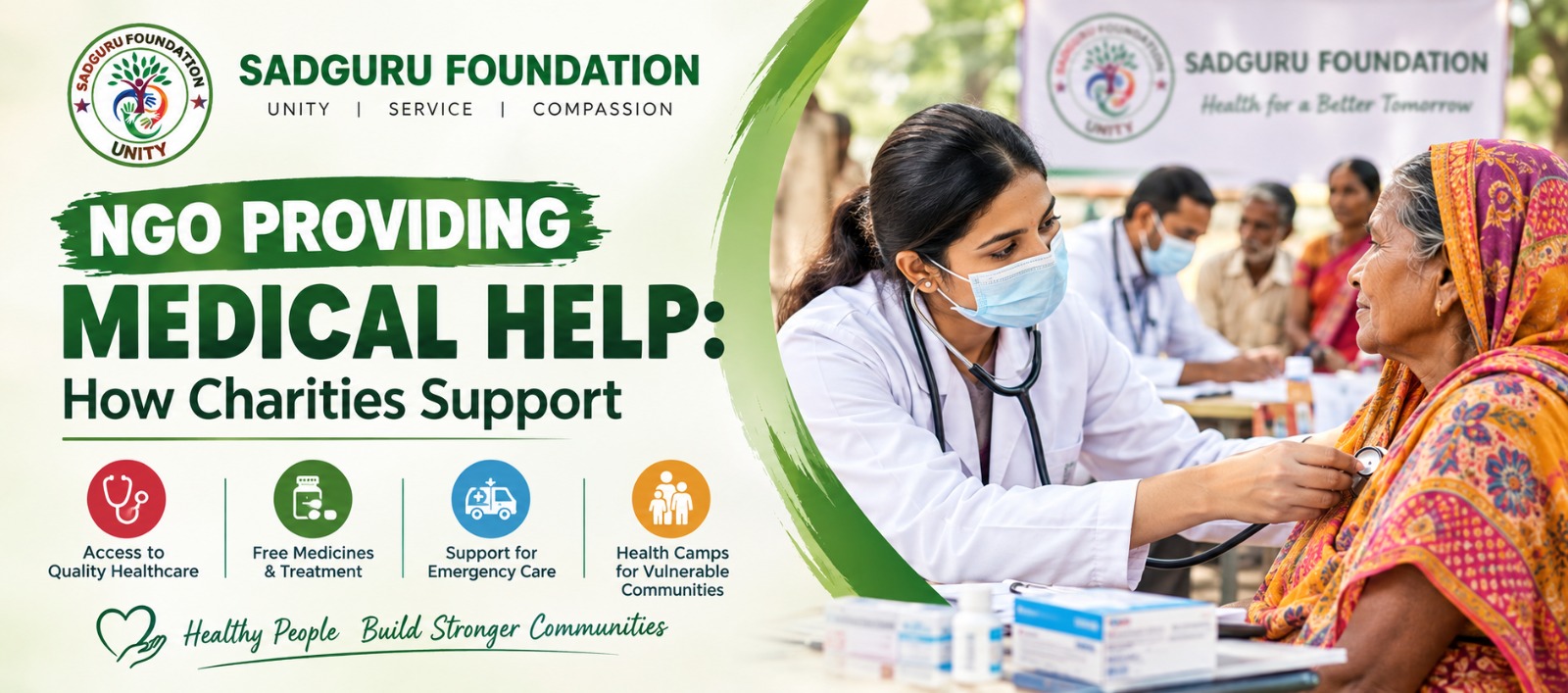
NGO Providing Medical Help: How Charities Support Accessible Healthcare in India
Access to timely healthcare is essential for a healthy and dignified life, yet medical expenses can become a serious barrier for families with limited financial resources. An NGO providing medical help can play an important supporting role by connecting vulnerable individuals with healthcare services, medicines, diagnostics, treatment assistance, health awareness programmes and emergency support. Such organisations can complement government healthcare systems and help people navigate available resources when financial or social barriers make treatment difficult.
The need for accessible healthcare goes beyond treating illness. According to the World Health Organization (WHO), universal health coverage means that people should be able to obtain the health services they need without experiencing financial hardship. It includes health promotion, prevention, treatment, rehabilitation and palliative care.
What Does an NGO Providing Medical Help Usually Do?
An NGO providing medical help may support communities in several ways, depending on its objectives, resources, and partnerships. Medical assistance does not necessarily mean operating a hospital. Many nonprofit organisations work alongside hospitals, doctors, healthcare professionals, government programmes and community volunteers.
Common forms of support can include:
- Medical camps and health check-ups
- Assistance with medicines and essential healthcare supplies
- Diagnostic test support
- Treatment assistance for financially vulnerable patients
- Blood donation and awareness drives
- Maternal and child health initiatives
- Health and hygiene awareness
- Preventive healthcare education
- Referral assistance for specialised treatment
- Emergency medical support
- Assistance in accessing government healthcare schemes
Services differ by organisation, so donors and beneficiaries should always check an NGO's current programme information before assuming a particular treatment or financial assistance is available.
Why Is Medical Assistance Important for Low-Income Families?
Healthcare costs can affect household finances in multiple ways. A family may have to pay for consultation, diagnostic tests, medicines, transportation, hospitalization, and follow-up care. For someone living on a limited income, even a relatively small unexpected expense can delay treatment.
This is why financial protection is an important part of universal healthcare. WHO explains that universal health coverage involves access to appropriate healthcare without financial hardship and includes financial risk protection as part of the broader objective.
An NGO providing medical help can therefore act as an additional support mechanism for people who may otherwise struggle to access appropriate care. The most effective programmes generally focus not only on immediate assistance but also on prevention, awareness, early identification of health problems, and referrals.
What Types of Assistance an NGO Providing Medical Help Offers?
1. Preventive Healthcare
Prevention can reduce the likelihood of serious health problems becoming more difficult or expensive to treat. NGOs may organise awareness campaigns, screening activities, vaccination awareness programmes, hygiene education or basic health check-ups.
WHO describes primary healthcare as covering a continuum that includes health promotion, disease prevention, treatment, rehabilitation and palliative care.
2. Health Check-Up Camps
Community health camps can help people identify potential health concerns and encourage them to seek professional medical advice. Depending on the programme, camps may include basic health assessments, blood pressure or blood sugar checks, consultations and referrals.
However, health camps should complement—not replace—professional diagnosis and treatment from qualified healthcare providers.
3. Medicines and Essential Supplies
Some vulnerable patients require assistance purchasing prescribed medicines or essential healthcare supplies. An NGO providing medical help may meet these needs directly or through partnerships with healthcare providers and donors.
4. Treatment and Diagnostic Assistance
In some cases, nonprofit organisations may help eligible beneficiaries with diagnostic tests or treatment-related expenses. This can be particularly relevant when a patient requires continued care but faces financial constraints.
Before donating for medical treatment, donors should verify the organisation's eligibility criteria, documentation requirements, beneficiary-selection process and reporting practices.
5. Blood Donation and Health Awareness
Blood donation initiatives can be another important area of nonprofit healthcare work. Awareness campaigns by an NGO providing medical help can encourage eligible individuals to donate blood through appropriate medical facilities and organised camps.
The broader objective is to strengthen community participation in healthcare rather than relying exclusively on emergency intervention.
How Government Healthcare Programmes and NGOs Can Work Together
An NGO providing medical help does not necessarily need to duplicate government healthcare services. In many situations, the nonprofit sector can help beneficiaries understand and access existing public programmes.
India has developed several healthcare initiatives aimed at improving affordability and access. WHO India notes that Ayushman Bharat includes both Pradhan Mantri Jan Arogya Yojana (PM-JAY) and primary healthcare facilities, while Ayushman Arogya Mandirs provide broader primary healthcare services.
The National Health Mission also states that its objective includes universal access to equitable, affordable, and quality healthcare services.
Useful official resources include:
- WHO – Primary Health Care
- WHO India – Universal Health Coverage
- National Health Mission – Government of India
- WHO – Universal Health Coverage
- Income Tax Department – Nonprofit and donation-related guidance
These sources can help donors and beneficiaries distinguish between government healthcare benefits and additional charitable assistance.
How to Choose a Reliable Medical NGO
Choosing where to donate requires more than looking at emotional stories or social media posts. Donors should conduct basic due diligence before contributing.
Look for an organisation that provides:
Clear programme information:
The NGO should explain what kind of healthcare assistance it provides and who can receive it.
Transparent donation information:
Donors should be able to understand how contributions can be made and, where applicable, how funds are allocated.
Organisational details:
Check the organisation's legal identity, contact information, registration details and publicly available information.
Evidence of activities:
Photographs, programme updates, annual reports, impact information and beneficiary stories can help establish whether the organisation actively conducts the stated work. These should be considered alongside other verification rather than treated as proof by themselves.
Responsible beneficiary handling:
Medical beneficiaries may be in vulnerable situations. A responsible organisation should respect privacy, dignity and informed consent when sharing patient information or photographs.
Financial and tax documentation:
If tax benefits are advertised, donors should verify the organisation's current eligibility and documentation rather than relying solely on promotional claims. India's Income Tax Department provides official information concerning nonprofit registrations, approvals and donation reporting.
How Can You Support Medical Assistance Through Donations?
There are several ways individuals can contribute to healthcare-related charitable work.
Donate Financially
A monetary contribution gives an organisation flexibility to respond to identified needs. Before donating, check the NGO's official donation page and use its verified payment or banking information.
Sadguru Foundation provides an official donation facility for supporters interested in contributing to its charitable activities.
Donate Medical Supplies Responsibly
Not every medicine or medical product is appropriate for donation. Unsolicited medicines can create storage, safety and regulatory issues. Always ask the organisation what supplies are currently required and follow its instructions.
Volunteer
Healthcare professionals can potentially contribute through approved medical camps, awareness sessions or professional services, while non-medical volunteers may assist with outreach, logistics, registration and community awareness.
Promote Health Awareness
Sharing reliable information about preventive healthcare, hygiene, screening and available government schemes can also create meaningful community impact.
Why Transparency Matters When Supporting Medical Causes
Medical fundraising involves vulnerable beneficiaries and potentially significant expenses. Donors should therefore look for organisations that communicate responsibly about their programmes.
An NGO providing medical help should ideally be able to explain its programme objectives, beneficiary criteria and operational approach without making unrealistic promises about medical outcomes.
Transparency is especially important because healthcare assistance can involve sensitive information. A patient's diagnosis, photographs, medical documents and personal circumstances should not be used carelessly for fundraising.
For donors, responsible giving means combining compassion with verification. For NGOs, responsible communication means demonstrating impact while preserving the dignity and privacy of the people receiving assistance.
How Sadguru Foundation Can Help You Support a Social Cause
Sadguru Foundation works across charitable initiatives and provides an official channel for people who want to contribute to its work. Its publicly available programme information includes initiatives supporting education and community welfare, while its official donation page provides information for supporters who wish to contribute.
If your goal is to support vulnerable communities, consider contacting the foundation directly to understand its current healthcare-related needs, beneficiary programmes and the most appropriate way to contribute. This approach helps ensure that your donation is directed toward an identified requirement rather than an assumed one.
Frequently Asked Questions
How to get medical help from an NGO?
Contact the NGO through its official website or office and explain your medical and financial situation. Keep prescriptions, medical reports, income proof and identity documents ready. Eligibility and assistance vary by organisation.
Which NGOs in Mumbai offer medical help?
Mumbai has several organisations working in healthcare and patient support, including Sadguru Foundation, Bombay Medical Aid Foundation and Jeevan Jyot Cancer Relief & Care Trust Drug Bank. Verify their current programmes before applying.
What is the PM Modi free medicine scheme?
The Pradhan Mantri Bhartiya Janaushadhi Pariyojana (PMBJP) provides quality generic medicines at substantially lower prices through Jan Aushadhi Kendras. It is an affordable-medicine scheme, not generally a scheme providing medicines completely free.
How can I apply for Tata Trust for medical help?
Tata Trusts' Individual Grants Programme provides medical grants to eligible financially disadvantaged patients, primarily in Mumbai. Applicants can submit the completed form in person or by email; applications undergo scrutiny and socioeconomic assessment.
Conclusion
Healthcare should not become inaccessible simply because a person cannot afford every expense associated with treatment. Government programmes, healthcare institutions, community organisations and nonprofit groups can each contribute to improving access to care.
An NGO providing medical help can be especially valuable when it identifies genuine community needs and connects vulnerable people with appropriate healthcare resources. Donors can strengthen this work by choosing organisations carefully, verifying information and supporting clearly defined programmes.
For individuals looking to contribute through a social organisation, Sadguru Foundation offers an official donation channel. Before contributing specifically toward medical assistance, contact the foundation to confirm its current healthcare initiatives and the areas where support is most needed. A thoughtful donation, combined with responsible due diligence, can help turn financial support into meaningful access to healthcare.
